


Some technologies make themselves noticed immediately. Others work discreetly, woven into the very fabric of what we wear. That is the case with FIR rays (Far Infrared Rays), also known as far-infrared radiation: a form of electromagnetic radiation found in nature and emitted by the human body itself. In recent years, FIR has drawn increasing attention in the wellness and technical apparel sectors, particularly thanks to fabrics capable of interacting with the thermal energy our bodies naturally produce.
This is where FIR technology meets sportswear. Incorporated into yarns, it makes it possible to create garments that combine comfort, elasticity, breathability and the ability to interact with far-infrared radiation. Perhaps the most interesting detail? It all happens without batteries, electricity or artificial heat sources.
The interest is scientific, too. Some studies have reported promising findings concerning superficial microcirculation, local tissue oxygenation and thermoregulatory responses. This is an evolving field, in which it matters which results were observed, with which materials and using which devices: essential distinctions when interpreting potential benefits.
So what happens when FIR rays interact with the body? What separates an infrared lamp from leggings made with FIR yarns? And what difference might this technology make in practice, during a gym session or a day spent moving between a desk and physical activity?
To explore these questions, we will start with the science of far-infrared radiation and move on to its applications in FGM04 apparel. Along the way, we will examine physics, scientific studies, material characteristics and garment fit to understand what FIR textile technology can genuinely offer for everyday well-being.
Table of Contents
Origins and History of FIR Rays: From the Discovery of Infrared Radiation to Textile Technology
To discover where FIR comes from, we need to revisit an experiment involving sunlight. And a seemingly simple question: what lies beyond the colours we can see?
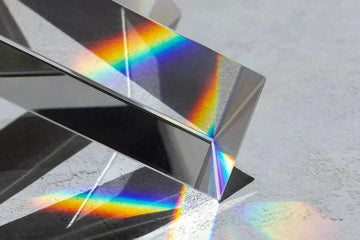
When white light passes through a prism, it separates into a sequence of colours, from red to violet. This is the visible spectrum, and each of its colours corresponds to a different range of wavelengths of electromagnetic radiation.
In 1800, physicist and astronomer William Herschel decided to investigate precisely this relationship between light and temperature. His experiment would transform our understanding of solar radiation.
Herschel separated sunlight with a prism and measured the temperature in the different coloured bands. As he approached red, the readings rose; but the surprise came when he placed the thermometer just beyond visible red, in a region that appeared completely dark. There, he recorded an even higher temperature.
That result revealed something remarkable: radiation could carry energy while remaining invisible to the human eye. It was infrared radiation.
We now know that the visible region ends, depending on the convention used, at approximately 700–780 nanometres. Beyond that boundary lies the infrared spectrum, which extends towards the microwave region.
Over the following two centuries, infrared applications multiplied: from thermography to sensors, from medical equipment to heating systems, and on to industrial instruments and technical materials. Different paths, all originating from the study of the same invisible part of the spectrum.
For clothing, the breakthrough came with mineral particles and bioceramic materials incorporated into yarns. These components can alter the emission and reflection characteristics of infrared radiation, turning a physical property into a feature of the fabric itself.
In this way, a technology once associated mainly with specialised devices found a place in soft, stretchy and comfortable clothing. Garments designed to accompany everyday life, not just occasional or specialised use.
What Are Far-Infrared Rays (FIR)?
Far-infrared radiation belongs to the broad family of infrared radiation: electromagnetic waves with wavelengths longer than those of visible light. Although invisible, they are part of the constant exchanges of energy taking place around us.
The abbreviation FIR stands for Far Infrared Rays. It describes the portion of the infrared spectrum farther from the visible red region.
We cannot see infrared radiation, yet it plays a major role in thermal energy exchanges between the body and its surroundings. This very relationship is what makes FIR textile materials so interesting.
What Is the Difference Between Near-, Mid- and Far-Infrared Radiation?
There is no single classification that applies to every context: the infrared spectrum includes near-, mid- and far-infrared bands, but the boundaries between the three regions vary slightly depending on the scientific field and classification system.
| Type | Characteristics | Applications |
|---|---|---|
| Near-infrared (NIR) | Closest to visible light, with relatively short wavelengths. | Sensors, spectroscopy, optical instruments and certain photobiological applications. |
| Mid-infrared (MIR) | Occupies the intermediate region of the infrared spectrum. | Materials analysis, thermal measurements and industrial applications. |
| Far-infrared (FIR) | Includes the longest wavelengths within the infrared region, according to the classification used. | Studies of heat exchange, specialised devices and fabrics containing bioceramic materials. |
For example, in technological and biomedical contexts, FIR may refer to different wavelength ranges. When reading a study, it is therefore worth looking beyond the label “far-infrared” and checking the wavelengths actually used.
Are FIR Rays Also Found in Nature?
Yes, and far more widely than you might imagine. Any body at a temperature above absolute zero emits electromagnetic radiation, with characteristics determined by its temperature and surface properties.
Infrared radiation therefore takes part in everyday energy exchanges between people, other living organisms, objects and their surroundings. It is not something that exists only inside a technological device.
We emit thermal radiation ourselves. At normal skin temperatures, a significant proportion falls within the far-infrared region, with peak emission around 10 micrometres. This is a fundamental physical fact for understanding the interest in FIR yarns.

The Sun, meanwhile, emits radiation across several regions of the spectrum, including visible light and infrared. It is important, however, not to confuse sun exposure with wearing FIR fabrics: sunlight also contains ultraviolet radiation, whereas a passive FIR garment is not a source of UV rays.
How Do FIR Rays Interact with the Human Body?
Even when we are perfectly still, our bodies continuously exchange energy with the surrounding environment. They do so through four mechanisms: conduction, convection, evaporation and radiation. The last is particularly relevant to understanding infrared radiation.
With radiative heat transfer, energy travels as electromagnetic waves: surfaces can therefore release or receive heat without touching. This is one of the ways the body maintains its thermal balance with its surroundings.
When infrared radiation reaches the skin, some is reflected and some absorbed. The amount absorbed depends mainly on wavelength and on the properties of the biological tissue involved.
This is where water, abundant in the skin, comes into play: it efficiently absorbs many far-infrared wavelengths. As a result, a significant proportion of FIR energy is absorbed within the more superficial layers.
Under certain conditions, local thermal and physiological responses may occur. It is important, however, to distinguish these effects from direct radiation penetration: observing a response in biological tissue does not, in itself, prove that FIR travels uniformly through deeper layers.
Does Far-Infrared Radiation Really Penetrate Up to 4 Centimetres?
It is one of the most common questions, but there is no single penetration depth that applies to every type of infrared radiation. Penetration varies with the physical properties of the radiation and the tissues it passes through.
Some publications report substantial depths. To interpret these correctly, however, we need to know the wavelength used, the measurement method and, above all, the distinction between optical penetration and secondary physiological effects observed at greater depths.
It would therefore be incorrect to claim that all FIR fabrics allow radiation to penetrate up to 4 centimetres into the body.
For this reason, research on FIR materials also examines what happens locally: radiative exchanges, thermal regulation and certain microcirculatory parameters offer valuable insights into the interaction between fabric and body.
These questions are especially relevant to clothing designed to remain close to the skin for hours, such as leggings, sports bras and technical tops worn at work or during physical activity.
How Do FIR Fabrics and Mineral-Enhanced Yarns Work?
It all begins with the material. Bringing FIR technology into clothing involves using components that can change a fabric’s radiative behaviour while retaining the qualities expected of a wearable garment.
Some technical yarns incorporate mineral or bioceramic particles. Their purpose is to interact with the infrared radiation naturally emitted by the body, without adding any external device to the garment.
Once worn, the fabric stays in contact with, or very close to, the skin. The particles embedded in the yarn take part in thermal energy exchanges through radiation absorption, emission and reflection.
This is what sets it apart from conventional fabric without those components: the FIR material has specific radiative properties built into its very structure.
Does FIR Technology Generate Heat?
The answer matters: a passive FIR fabric is not an electrical heating element and does not independently generate artificial heat. Its operating principle is different from that of a garment heated by an external power source.
The material interacts with the thermal energy already present in the environment and naturally associated with body temperature.
For the wearer, this means something very practical: FIR textile technology does not require a heating treatment. The garment can simply become part of an everyday wardrobe.
The feeling of warmth or coolness, however, also depends on other factors: thickness, construction, breathability and ambient temperature. That is why the same technology can feature in four-season FIR fabrics as well as in versions designed for enhanced freshness or a warmer feel.
Why Does It Matter That Minerals Are Embedded in the Yarn?
Imagine two ways of making a fabric functional: applying a treatment to its surface or embedding the particles directly into the fibre. The difference is substantial, especially when considering how long the material retains its properties.
In FGM04 FIR fabrics, the minerals are an integral part of the yarn. They are not a cream, a cosmetic ingredient applied to the skin or a finish that needs renewing after every use.
The FIR characteristics are part of the material’s structure and do not simply wear off through ordinary washing. This is one of the practical advantages of incorporating them into the yarn.
Caring for the garment still matters: following the washing and care instructions helps preserve elasticity, opacity, fit and the quality of the finishes over time.
Does FIR Fabric Have to Be Very Tight to Work?
No. FIR fabric does not need to exert high pressure to possess its radiative properties.
The ideal fit keeps the garment in place and follows the body with balanced closeness, without creating excessive pressure points. It is about size and construction, not how tightly the fabric can squeeze.
This way, you can enjoy the characteristics of the FIR yarn alongside the comfort that should define a well-designed technical garment.
The difference is especially noticeable in real life: after hours at a desk, during frequent workouts or simply for people who find highly compressive clothing uncomfortable.
What Are the Benefits of Wearing FIR Clothing?
What makes a FIR garment different in everyday life? The answer lies in the combination of the yarn’s radiative properties and textile design that delivers comfort, elasticity and a pleasant feel even after several hours of wear.
Alongside the physiological effects still being studied, there are qualities you notice straight away: how the material moves with you, manages perspiration, feels soft against the skin and adapts to the wearer’s needs. These are tangible benefits, not minor details.
1. Long-Lasting Comfort and a Pleasant Feeling of Lightness
The right garment is one you almost forget you are wearing: it stays in place, moves with you and never distracts you with discomfort or constant adjustments.
With this in mind, FGM04 FIR fabrics are designed to offer high elasticity, a pleasant feel against the skin and a soft, close fit that follows the body’s contours.
It is easy to appreciate these qualities on busy days: a walk, a commute, several hours sitting at a desk and perhaps a workout as well. The fabric accompanies different situations, each with its own movement demands.
For many people, the pleasure lies in feeling the legs evenly enveloped by stable, soft fabric, without the stiffness that sometimes comes with highly compressive garments.
The feeling of lighter legs and well-being remains subjective. Mechanical comfort, however, is a tangible quality worth considering when choosing clothes to wear for hours at a time.
2. Support for Thermal Comfort
Temperature is another interesting aspect: FIR yarn technology is designed to interact with the body’s natural thermal exchanges.
But thermal comfort depends on more than one factor. Knit density, breathability, moisture management and the yarn’s structure all matter and can significantly change how the material feels against the skin.
FGM04 four-season FIR garments are designed for different conditions of use. They offer a versatile option without functioning like electrically heated clothing.
Some people want a cooler feel, especially in summer or at the gym; others prefer greater thermal protection on cold days. Different fabric constructions allow you to choose in either direction.
That is the value of a range of fabrics designed for different seasons and activities: finding the right comfort for the situation rather than assuming that one material always behaves the same way.
3. Stretch and Freedom of Movement
Think of a series of squats, lunges, bends and twists: each movement asks leggings to stretch, adapt and return to position without restricting your body.
Elastic fibres and carefully balanced construction make this possible: the fabric follows your shape through different positions and recovers its intended fit after movement.
FIR technology fits into this construction without adding rigid parts, external accessories or components that must be applied to the skin. It stays in the yarn while the garment continues to perform like sportswear.
In this way, the infrared technology’s properties coexist with everything you expect from quality technical apparel: freedom, functionality and comfort during activity.
4. Less Chafing Thanks to Seamless Construction
During exercise, even a seam can make a difference. That is why many FGM04 technical garments feature seamless construction, reducing the number of seams and potentially uncomfortable contact points.
As we move repeatedly, especially during more dynamic activities, traditional seams can create friction in particularly sensitive areas.
Reducing these friction points makes movement more comfortable and may help lower the risk of irritation caused by mechanical rubbing.
For more examples and advice, see our guide to what seamless clothing means and the benefits it offers.
5. Built-In Technology and Ease of Use
There is one final advantage that is especially welcome in everyday routines: simplicity. FIR is already part of the fabric, with no additional steps to remember.
No activation programmes, no waiting for the material to warm up, no batteries and no separate equipment to operate.
The yarn’s radiative properties are present during normal wear. This is how the technology can become part of choosing clothing for sport and everyday activities.
That very ease of use makes FIR particularly appealing to anyone who wants to wear a comfortable garment for hours, without turning getting dressed into a scheduled treatment.
FIR Rays, Microcirculation and Oxygenation: What Does Scientific Research Say?
One of the most interesting questions researchers are exploring concerns the skin itself: how might FIR technology interact with peripheral microcirculation and local tissue oxygenation? This is among the most widely studied areas of research in the field.
Microcirculation is a delicate network of tiny blood vessels—arterioles, capillaries and venules—through which oxygen, nutrients and metabolic waste products are exchanged between the blood and tissues. It is an unobtrusive but essential system, and one that is also monitored in studies of FIR materials.
Some studies have investigated whether devices capable of re-emitting far-infrared radiation or bioceramic materials might influence certain local physiological parameters. The findings point to interesting possibilities that must be interpreted within the context of each experiment.
Evidence on Wearable FIR Materials
One example is a clinical study published in Experimental Dermatology in 2024: researchers examined a passive FIR device applied to the skin of 20 healthy volunteers.
The findings included statistically significant differences in certain secondary endpoints, including skin perfusion in the forearm and local oxygenation. The primary endpoint, however, did not reach statistical significance—an essential qualification for interpreting the study rigorously.
This is an encouraging signal because it suggests a possible local effect of specific FIR materials. It does not, however, justify automatically extending the same result to every pair of leggings or any other garment on the market: materials and study protocols matter.
A broader perspective comes from a systematic review published in PLOS ONE in 2021, which collected and analysed 11 studies on the use of FIR garments in sport.
The authors identified promising preliminary results, particularly for certain aspects of thermoregulation and specific haemodynamic parameters. They also stressed the importance of pursuing larger studies using more consistent methodologies.
What Does This Mean in Practice for Someone Wearing FIR Clothing?
What do these studies tell us when viewed together? FIR fabrics represent an interesting research direction for skin well-being and the physiology of microcirculation: a field in which useful indications are emerging and further investigation is needed.
The appeal of these materials therefore goes beyond appearance or the softness of the fabric. It also concerns the possibility that some yarn properties may interact with local physiological mechanisms being studied by researchers.
For someone choosing FIR leggings, all this goes hand in hand with a very tangible experience: wearing a garment that combines comfort and elasticity with technology developed to interact with the body’s infrared radiation. A technology whose potential applications continue to be explored scientifically.
FIR Rays, Microcirculation and the Appearance of Cellulite
When we talk about skin appearance, microcirculation often enters the conversation. This is hardly surprising: its relationship with skin tissues is also a subject of considerable interest in cosmetic research.
Cellulite, however, is more complex than the skin’s surface alone might suggest. It involves subcutaneous tissue, the distribution of fat, fibrous septa and individual factors such as genetics, hormonal balance and skin characteristics.
Microcirculation and fluid distribution may also contribute to the skin’s appearance. They form part of a complex picture in which several elements play a role in the development of visible irregularities.
This is the context in which the potential of FIR fabrics is being investigated: scientific interest includes skin perfusion and oxygenation in superficial layers.
A FIR garment can therefore fit into a routine focused on skin well-being, particularly when it is comfortable and pleasant to wear regularly. Fabric quality becomes part of the everyday experience of self-care.
Can FIR Clothing Complement a Routine for the Appearance of Cellulite?
Alongside other wellness habits, FIR clothing may play a complementary role: through the technical properties of the yarn and the possible support for superficial microcirculatory mechanisms that researchers are examining.
It is important to understand its limits: wearing FIR fabric does not eliminate localised fat deposits, replace physical activity or independently change the structural causes of cellulite.
A comprehensive approach to well-being and skin appearance continues to combine regular physical activity, balanced nutrition, adequate hydration and suitable cosmetic treatments.
Within these habits, comfortable FIR leggings add the ongoing presence of a technical fabric with specific properties, while preserving freedom of movement and an enjoyable feel even during the most ordinary moments of the day.
Can FIR Fabrics, Creams and Supplements Be Used Together?
Body care often grows out of small, complementary choices: using a suitable cosmetic, considering a supplement when appropriate and wearing comfortable technical clothing. FIR garments can be part of that combination, too.
Each element, however, has its own specific function. A cosmetic should be considered in light of its formulation and application; a supplement should be used according to its directions; and a FIR garment provides comfort and the properties of its technical yarn.
Keeping these roles distinct helps create a sensible routine without assigning a single product results that actually depend on the interaction of many factors.
FIR Technology in Sport: Comfort During Activity and Well-Being After Exercise
When we work out, the quality of our clothing is revealed in the details: fabric that follows the body, manages perspiration, stays in place and lets us concentrate on exercise without discomfort.
FIR technology fits in here as an additional feature of the yarn, incorporated into a garment that must first and foremost meet the real demands of movement.
During Exercise: Freedom of Movement and Breathability
Running, a gym class or a functional training session requires fabric to keep adapting. Posture, range of motion and the intensity of physical demands all change.
FIR leggings, cycling shorts and tops made with stretchy, opaque materials are designed to accompany squats, lunges, stretching and dynamic exercise with a close fit that leaves room to move.
Seamless construction adds to this sensation: fewer seams mean fewer places where friction may develop during a workout.
As exercise intensity increases or temperatures rise, a more breathable fabric structure can make a noticeable difference to the feeling of freshness and overall comfort.
After Exercise: Rediscovering Comfort and Lightness
Interest in FIR continues after the workout ends. Some studies have examined FIR materials after physical exertion, assessing physiological parameters and the subjective sensations reported by participants.
The indications emerging from these studies deserve further investigation. Based on current evidence, however, it is not possible to claim that every FIR garment reliably and uniformly accelerates all the physiological processes involved in post-exercise recovery.
In practical terms, there is still value in choosing soft, pleasant materials for the hours after physical activity, when you want comfort and a welcome feeling of rested legs.
One good habit completes the routine: after sport, change out of sweaty clothes and into clean, dry garments.
Which Activities Can Benefit from FIR Fabric?
| Activity | Main Need | Useful Garment Features |
|---|---|---|
| Fitness and gym training | Stability during wide-ranging, repetitive movements. | Stretch, opacity and a secure waistband. |
| Yoga and Pilates | Freedom to move through poses and comfort against the mat. | Soft fabric, fewer seams and a close fit without restriction. |
| Walking and Nordic walking | Comfort during sustained movement. | Breathability, stretch and thermal comfort management. |
| High-intensity training | Moisture management and stability. | Lightweight, durable and highly breathable materials. |
| Everyday activities | Comfort even over several hours. | The right fit, soft fabric and a pleasant feel against the skin. |
Infrared Therapy: Differences Between FIR Lamps and FIR Fabrics
The same word, “infrared”, appears on very different products. It is easy to assume they work in the same way, but there are decisive differences between a device that emits heat and a FIR fabric.
The key distinction is this: an infrared lamp and a passive FIR garment work in very different ways. The energy used, intensity and method of exposure are all different.
How Do Infrared Lamps Work?
An infrared lamp emits infrared radiation from an electrically powered source. Depending on the model, power and spectrum, it can heat exposed surfaces significantly: this is an active process with its own specific characteristics.
Exposure intensity varies according to distance, duration, the area treated and the device’s specifications. All these factors need to be considered during use.
Some equipment is intended for professional or healthcare settings and comes with specific instructions for use.
How Do FIR Garments Work?
A passive FIR garment follows a different principle: it contains no lamp and needs no electrical power supply.
Mineral particles embedded in the yarn interact with radiative exchanges that occur naturally in relation to body temperature.
The fabric is not designed to recreate the intense heating or exposure conditions of an active therapeutic device. Its function is integrated into the experience of wearing technical apparel.
| Feature | Infrared lamps | Passive FIR fabrics |
|---|---|---|
| Energy source | Electric power supply. | Energy exchanges involving the body and its surroundings. |
| Active heating | May occur and be intense. | Not intended: the garment is not an electrical heat source. |
| Method of use | Exposure for specified times and at specified distances. | Normal use as clothing. |
| Power adjustment | Depends on the device. | Unnecessary, as there is no adjustable active source. |
| Main use | Specific applications, including professional ones. | Technical, sports and everyday apparel. |
| Precautions | Consider exposure, temperature and individual health conditions. | Mainly comfort, fit, skin sensitivity and individual circumstances. |
The distinction also brings convenience: FIR fabrics let you wear a material designed to interact with infrared radiation without undergoing an active heating treatment or adding another procedure to your day.
FIR Rays and Health: Are There Contraindications?
When it comes to safety, the right question is not simply “Is this infrared radiation?” but, more importantly, “How is it being used?” The method of exposure is the starting point for understanding the precautions involved.
Who Should Take Particular Care with Infrared Lamp Treatments?
Improper use of an active source may cause excessive heating and, in more serious cases, burns. This is why power, exposure time and instructions for use require careful attention.
Consulting a healthcare professional is particularly important when certain conditions could alter the body’s response to heat: reduced skin sensation, significant cardiovascular conditions, vascular problems or other medical circumstances requiring caution.
For suspected or diagnosed thrombosis, coagulation disorders, lupus, kidney failure or other systemic diseases, a doctor should assess whether any particular thermal treatment is suitable.
Not all devices have the same risk profile: contraindications depend on the device technology and the exposure protocol used.
Does Wearing FIR Clothing Involve the Same Risks?
A passive FIR garment, by contrast, does not expose the body to the intense heating that can occur with some active sources. This is also an important distinction in everyday life.
It is worn like ordinary technical clothing, with a different profile of use from an infrared lamp or a specific thermal treatment.
The main considerations are therefore size, individual tolerance of the materials and any conditions that could make very close-fitting clothing unsuitable.
If you have significant circulatory problems, persistent swelling of unknown cause, pain, altered sensation or conditions requiring medical guidance on clothing, it is advisable to consult a healthcare professional.
FIR fabric remains a material for technical apparel: it is not intended to diagnose, prevent or treat disease.
What Types of FIR Fabric Exist, and How Do You Choose the Right One?
Once you understand the FIR principle, there is something else to consider: not all yarns using this technology are alike. The material’s construction changes the sensations a garment can offer.
Two items of clothing containing FIR mineral particles may differ in thickness, feel cooler or more enveloping, and suit different seasons. Much of the wearing experience is determined by the fabric’s structure.
To meet different needs, FGM04 has developed several types of FIR fabrics. Choosing becomes a personal decision, depending on activities, environmental conditions and the sensations you prefer against your skin.
| Fabric | Characteristics | Feel and use |
|---|---|---|
| Four-season FIR | Yarn featuring infrared technology, stretchy and opaque, designed for use across different seasons. | Soft, enveloping feel; suitable for the gym and everyday activities. |
| CryoFIR | Lightweight, highly breathable structure with Breeze technology to encourage a feeling of freshness. | Cool and light; particularly appealing for intense workouts and high temperatures. |
| HotFIR | FIR fabric designed to offer a greater sensation of warmth. | Warmer and more enveloping; ideal when you want additional thermal comfort. |
| EcoFIR | Yarn containing recycled polyamide and FIR technology, also available with mélange effects. | Combines technical characteristics, distinctive textures and consideration in the choice of fibres. |
| BambùFIR | A fabric from the FIR range with a specific composition and structure, distinguished by a more substantial hand feel. | A structured, enveloping sensation for those who prefer a more substantial fabric. |
Are FIR and CryoFIR the Same Thing?
Four-season FIR and CryoFIR share the technology’s basic principle, but differ in yarn construction and fabric behaviour. This difference helps determine when each is most suitable.
CryoFIR prioritises lightness, ventilation and a cool feeling. Four-season FIR, on the other hand, focuses on versatility and comfort in different conditions.
So the question is not which is universally “better”, but which suits the moment: an intense session in hot weather or a day when a versatile, pleasant-to-wear fabric is just what you need.
Why Choose FGM04 FIR Clothing?
FGM04’s approach brings together materials research and technical apparel design. FIR technology is incorporated into garments also designed for comfort, freedom of movement and carefully considered fit.
A garment needs to do more than simply fit closely. It should follow the body during sport and everyday life, flatter the figure and do so without excessive compression. The wearing experience is built around this balance.
Made in Italy Production
One distinctive feature is production: FGM04 technical apparel is made entirely in Italy.
Made in Italy production keeps garment design, material selection and manufacturing closely connected, bridging the concept and the finished result.
After all, leggings are about more than their yarn. Knit distribution, waistband height, seam placement and the balance between stretch and stability all matter. These details affect how a garment fits and moves with the body.
Technical Fabrics Certified to OEKO-TEX® STANDARD 100
Material quality deserves attention, too. FGM04 garments use fabrics certified to OEKO-TEX® STANDARD 100, as indicated on the relevant product pages.
This certification concerns compliance with requirements for harmful substances in textile materials. It is a useful reference when considering what stays in contact with the skin.
Within the standard, Class I sets the strictest requirements and applies to textile products for babies and children up to three years of age.
For anyone wearing a garment for many hours, certification is worth knowing about. You can explore the criteria of the OEKO-TEX standard and visit the official OEKO-TEX® website directly.
Fits Designed for Different Needs
Alongside fabric, there is the way the garment is constructed. One of the FGM04 range’s defining features is precisely the variety of fits available.
A high, straight waistband does not feel the same as a V-shaped one. The visual effect also changes: Basic, without a central back seam, creates a clean line, whereas a gathered Push Up design enhances the buttocks more noticeably.
The FIR yarn works on the same principle, but choosing a particular design lets you match the garment to your own preferences for fit, comfort and style.
How to Choose FGM04 FIR Garments: Styles, Fabrics and Fit
Faced with so many FIR leggings, the first question is simple: which pair will genuinely make me feel good? To answer it, consider six separate factors: fabric, fit, back construction, waistband shape, rise and intended use.
Even with the same yarn, two styles can feel and look different. Often, garment design makes more difference to the choice than the material itself.
FIR Leggings: Differences Between the Main Styles
| Style | Fabric and fit | Construction, rise and waistband | Use and distinctive features |
|---|---|---|---|
| Basic High Waistband | Four-season FIR, smooth, soft knit, regular fit. | High waist, straight 10.5 cm waistband, no seam across the buttocks. | Gym and everyday wear; clean, uniform back line. |
| Confidence | Four-season FIR, smooth, opaque, regular fit. | 9 cm waistband, intermediate height compared with taller waistbands, Soft Push Up without gathering. | Sport and everyday wear; subtle enhancement of natural curves. |
| All-Up | Four-season FIR, stretchy, opaque, regular fit. | High waist, straight 13 cm waistband, Push Up with gathering. | Training and leisure; a noticeable shaping effect on the buttocks. |
| Gym Fashion | Four-season FIR, smooth and matte, regular fit. | High waist, V-shaped waistband, gathered Push Up; waistband height depends on the version. | Fitness and gym workouts; particularly enhances the waistline. |
| Vertigo | Four-season FIR, smooth texture, regular fit. | 12 cm high waistband with a 5 cm V-shaped section at the back, gathered Push Up and contouring. | Fitness and leisure; emphasises the back contour of the waist. |
| Soft Push Up CryoFIR | Lightweight, cool and breathable CryoFIR, regular fit. | High waist, straight 11 cm waistband, Soft Push Up without gathering. | Dynamic workouts and hot weather; combines freshness with gentle shaping. |
The measurements and features listed refer to the versions described on the product pages consulted. Before buying another colour or variation, it is always useful to check the specific product page and any collection updates.
For Those Who Prefer a Clean Back Line
If you love a streamlined look from behind, the Basic leggings with a high waistband are worth considering: they have no central seam across the buttocks.
The back remains smooth and uniform, with a pleasantly soft feel. Meanwhile, the high waistband embraces the abdomen and completes a clean silhouette.
This is a style to consider for the gym and everyday wear, especially if your priorities are comfort, FIR technology and simple lines.
For Those Looking for Subtle Shaping
If you prefer a more understated effect, consider the Confidence leggings, featuring a Soft Push Up construction without gathering at the back.
Their design follows and enhances your curves without the central seam typical of more pronounced Push Up styles. The result is subtle, harmonious shaping.
The smooth knit and comfortable fit complete the style, which also appeals to anyone who prefers a more understated look.
For Those Who Want a Push Up Effect with a High Waistband
For a more noticeable Push Up effect, the All-Up leggings combine a high, straight 13 cm waistband with gathering at the back.
Two distinctive features work together: a wide waistband around the waist and a construction designed to enhance the buttocks.
The four-season FIR fabric adds a soft, enveloping feel, both during exercise and throughout everyday activities.
For Those Who Prefer a Shaped Waistline
If you want a more defined-looking waist, the Gym Fashion leggings introduce a distinctive feature: a V-shaped waistband paired with a gathered Push Up design.
The waistband visually follows and defines the waist; at the back, the gathered construction enhances the buttocks. This interplay of lines gives the style its identity.
Updated versions of the range, such as Nikita, have their own waistband details and measurements. To choose accurately, always consult the product page for the specific version you want.
For Those Who Want a Particularly Sculpted Back Waistband
The Vertigo Push Up leggings place particular emphasis on the design of the back: the 12 cm high waistband dips into a 5 cm V at the rear.
This geometry enhances the waistline and works alongside the gathering and contouring designed to accentuate the buttocks.
The smooth, matte FIR fabric gives an even appearance and follows the body with a close yet comfortable fit.
For Those Who Train in Hot Weather
When temperatures rise, the Soft Push Up CryoFIR leggings offer a different sensation against the skin, designed for those seeking extra freshness.
Their lightweight, highly breathable structure provides cool comfort, while the high waistband and ungathered Soft Push Up back gently follow the body’s curves.
They are a particularly attractive choice on warm days or for workouts where you prefer a light, cool and breathable material.
More Than Leggings: Sports Tops and Men’s FIR Clothing
Of course, FIR technology is not limited to leggings: it can also be incorporated into garments for the upper body.
The FGM04 collection includes sports tops, sports bras, tank tops and technical shirts, with constructions designed for different support and coverage needs.
In a seamless FIR top, for example, the technical yarn is combined with a construction that encourages freedom of movement in the upper body.
The support offered by a top and its FIR properties, however, are two separate matters. Support depends on the straps, underband, structure and elasticity; FIR properties come from the characteristics of the yarn used.
The men’s clothing range also features FIR garments: leggings, cycling shorts and technical shirts designed to accompany different movements and activities.
For the gym, fitness, walking and sport, the men’s collection offers close-fitting, functional garments that allow wearers to enjoy the properties of FIR yarn without necessarily seeking intense compression.
How to Choose the Right Size of FIR Leggings Without Sacrificing Comfort
Even the best textile technology can perform as intended only when the garment fits properly. That is why size matters just as much as style when choosing FIR leggings.
The right size follows the body, stays in place during movement and retains the opacity for which the fabric was designed.
The goal is not to seek the strongest possible pressure. Leggings should fit closely, not squeeze the body to its limit.
Why Is Hip Circumference So Important?
Hip and buttock measurements deserve particular attention: this is where the fabric experiences the greatest tension and where fit most directly affects the final result.
If the size is too small, the fabric is overstretched across the back. This can reduce opacity and alter the intended positioning of the features that create the Push Up effect.
In gathered styles, there must be enough fabric to follow and shape the buttocks properly. If there is too little, the construction cannot work as intended and the seams may be placed under greater strain, increasing the risk of damage.
Soft Leggings Are Not Necessarily Too Loose
Anyone accustomed to highly compressive clothing may initially find the softness of stretchy leggings unfamiliar. Sometimes the reduced pressure is mistaken for a size that is too large.
But a less restrictive fit does not necessarily mean the size is wrong. How the garment follows your movements is a far more useful indicator.
If the waistband stays in place, the fabric fits correctly around the hips and the leggings move through squats and lunges without slipping, you may have found exactly the right size.
For more practical advice, read our guide Leggings: how to choose the right size without making a mistake.
When and How Long Should You Wear FIR Clothing?
One of the most appealing qualities of this technology is how easily it fits into everyday life: a FIR garment is worn just like ordinary technical clothing.
Because the functional particles are already embedded in the yarn, the technology requires no activation procedure or predetermined warm-up time.
FIR leggings, a tank top or a technical shirt can accompany a workout, a walk, outdoor activities or hours at the office. The key factors in choosing what to wear remain the feel of the fabric and a fit suited to the situation.
Do You Need to Wear FIR Garments for Many Hours?
How many hours should you keep them on? Rather than following one rule for everyone, what matters is your own comfort and how the garment fits into your day.
A properly sized, clean and comfortable FIR garment can be worn for several consecutive hours, provided it does not cause discomfort.
Research sometimes uses protocols with precise exposure durations. It would not, however, be correct to turn those durations into a universal guarantee of cosmetic or physiological results for every FIR product.
The most natural approach is to choose when to wear the garment according to your needs, making comfort and compatibility with your daily activities the main considerations.
Can You Wear FIR Fabrics in Summer?
Yes. The presence of FIR technology does not automatically make a fabric warm. The material’s construction has a major influence on how it feels.
Thickness, knit structure and breathability all play a decisive role in a garment’s thermal comfort.
On warmer days, you may prefer lightweight, breathable materials designed to promote a pleasant sensation during movement and physical activity.
The same FIR technology can therefore be incorporated into clothing for different seasons: the infrared principle of the yarn should not be confused with an inevitably warming effect.
How to Wash and Care for FIR Clothing
There is something reassuring for anyone who wears the same technical garment frequently: the FIR component is part of the yarn, not a substance that needs to be reapplied periodically to the fabric’s surface. Day-to-day care is therefore much like that of ordinary sportswear. To keep it pleasant to wear, the priority is not reactivating the technology after every use but treating the material correctly when it is time to wash it.
When the manufacturer’s instructions are followed, the material’s inherent properties can be preserved through normal washing. This is a practical benefit for a garment designed to accompany many workouts, walks and active days.
That does not make care an afterthought. The way technical fabric is washed and dried affects its elasticity, the stability of its fit and its appearance. Caring for it therefore means preserving what makes it enjoyable to wear: softness, support and comfort, use after use.
To care for FGM04 technical clothing, follow these instructions unless the label of a particular garment states otherwise:
- Hand-wash or machine-wash at a maximum temperature of 30 °C.
- Use the correct amount of a mild detergent.
- Do not use fabric softener.
- Avoid bleach and harsh treatments.
- Do not tumble dry.
- Allow to air-dry naturally, away from direct heat sources.
- Do not iron the technical fabric.
- Avoid pulling seams excessively, especially on Push Up designs.
Choosing the right size also contributes to the longevity of leggings. Fabric that is constantly placed under excessive tension may lose its elasticity and stability more quickly. Good care therefore starts even before washing, with a fit that suits your body.
For further guidance, see the complete guide to caring for technical clothing.
Frequently Asked Questions About FIR Rays and Far-Infrared Fabrics
Are FIR Rays Dangerous to Health?
FIR is non-ionising electromagnetic radiation and forms part of the normal thermal exchanges between the body and its surroundings. Its presence alone does not mean there is a danger.
Assessing risk requires considering the source and intensity of exposure. Lamps and devices that actively produce heat call for different precautions from passive FIR fabric.
Wearing a well-designed FIR garment in the right size is, after all, a very different experience from undergoing an intense thermal treatment.
What Is the Difference Between FIR and Infrared Radiation?
“Infrared” is the name for the entire region of the electromagnetic spectrum beyond the red end of visible light.
FIR stands for Far Infrared Rays: a specific part of the wider infrared spectrum.
In other words, all FIR radiation is infrared, but the term “infrared” also includes regions other than far-infrared. This distinction is useful when comparing studies and technologies.
Do FIR Fabrics Heat the Skin?
A passive FIR fabric does not heat the skin like an electrically powered lamp: it does not generate heat through an active source.
It interacts with thermal energy associated with the body and environment. Whether the garment feels warm or cool also depends on its thickness, construction, ventilation and the conditions in which it is worn.
That is why there are four-season FIR materials as well as versions specifically developed to offer extra freshness or a warmer thermal sensation.
Can FIR Leggings Help Your Legs Feel Lighter?
Soft, stretchy FIR leggings in the correct size can make even the longest days more comfortable, providing a pleasant fit that hugs the body without excessive pressure.
Research also suggests possible interactions between certain FIR materials and parameters of peripheral microcirculation. Responses, however, may vary from person to person and are not a guaranteed result for everyone.
Several factors contribute to the sensation of lighter legs, including the comfort of fabric that gently envelops without excessive compression.
Does FIR Technology Work Even When You Are Not Exercising?
Yes, because the radiative characteristics of FIR yarn remain present even when you are not physically active.
The material continues to interact with energy exchanges associated with body temperature during rest, such as when you are sitting down.
This does not mean it produces the same physiological effects as exercise: walking, regular movement and training remain essential habits for health and overall well-being.
Does Wearing FIR Fabric Help You Lose Weight?
There is not enough scientific evidence to attribute a significant reduction in body fat to a FIR garment on its own. It is important to distinguish the properties of a fabric from a complex physiological process such as weight loss.
Changes in weight and body fat depend primarily on energy balance, diet, physical activity and many individual factors.
A FIR garment can instead offer an appealing combination of technology embedded in the yarn, comfort and textile properties, supporting an active lifestyle without claiming to replace it.
Why Do Some FIR Leggings Feel Less Compressive Than Other Sportswear?
Because a close fit does not necessarily mean high compression. These two concepts describe different sensations and constructions.
Leggings can follow the shape of the legs and stay in place without exerting intense pressure on the body.
This sensation is influenced by the yarn composition, knit structure, waistband design and choice of size.
Softness is therefore not an automatic sign that the size is too large: if the garment moves with you, stays in place and matches the measurements in the size chart, the fit may be exactly right.
Does FIR Technology Lose Its Effectiveness After Washing?
In FGM04 FIR fabrics, the mineral particles are permanently embedded in the yarn. They are not a cosmetic surface finish designed to wash away with each laundering.
To preserve the garment’s overall quality over time, it is still important to follow the care instructions carefully.
Excessively high temperatures, harsh washing and tumble drying can damage elastic fibres in particular, affecting the fit.
Can FIR Fabrics Replace Graduated Compression Stockings or Medical Treatments?
No. Sports FIR leggings and graduated compression devices have different characteristics and serve different purposes.
Medical compression is designed to apply specific pressures according to defined clinical needs.
If a doctor has prescribed graduated compression, FIR clothing should not be considered an alternative to the prescribed device.
How Can You Recognise Genuine FIR Fabric?
Start by reading the technical information: genuine FIR fabric is characterised by functional materials or particles embedded in the yarn.
Descriptions such as “thermal”, “warming” or “shaping” do not, on their own, prove that a garment actually uses FIR technology.
It is also worth checking the composition, textile certifications, care instructions and the clarity of the information provided by the manufacturer.
Remember that FIR fabric can be thin, cool and soft: it does not necessarily have to be thick, warm or highly compressive.
Is FIR Clothing Suitable for People Who Sit for Many Hours?
Yes, provided the garment fits properly. Soft, stretchy technical fabric can be comfortable even on a day involving long hours at a desk.
The waistband should remain comfortable while sitting and the material should not create unpleasant pressure points.
Naturally, comfortable clothing goes hand in hand with one essential habit: standing up regularly and breaking up prolonged sitting with movement.
For people who dislike tight clothing, close-fitting but not excessively compressive FIR leggings can be a practical choice to enjoy throughout the day.
Conclusion: Why FIR Technology Is an Interesting Development in Technical Apparel
From the discovery of invisible radiation to the development of technical yarns, the history of far-infrared radiation shows how a natural phenomenon can open new possibilities in clothing design. FIR is part of the energy exchanges between the body and its surroundings; materials that interact with this radiation now make it possible to incorporate those properties into the fabric itself.
Studies of wearable FIR materials offer promising signals regarding certain parameters of microcirculation, local oxygenation and thermoregulation. Research continues to better establish the extent of these effects and how reproducible they are across different conditions of use.
In the meantime, there is one quality we can recognise whenever we put on a well-designed technical garment: the difference made by softness, elasticity, freedom of movement, breathability, opacity and comfort.
FGM04’s approach is born from this very combination: the characteristics of FIR yarns are incorporated into garments designed to accompany both sport and everyday life.
Choosing FIR clothing means choosing advanced technical fabric designed to follow the body as it moves and deliver comfort throughout the day.
Variety completes the choice: yarns with different sensations, Basic, Soft Push Up and Push Up constructions, and waistbands of different heights. Every detail helps you find your own balance between fit and appearance.
Because a garment that truly works is one that flatters your figure and, above all, lets you move freely, feel comfortable and enjoy every activity naturally.
Recommended Reading from the FGM04 Blog
Scientific Sources and Further Reading
For a deeper look at the subjects discussed, here are references covering infrared physics, the properties of FIR fabrics and the scientific studies currently available. These sources make it possible to move from physical principles to experiments involving wearable materials, distinguishing what we know about individual phenomena from findings obtained with particular devices. The studies listed use different materials and protocols: however interesting the results may be, they do not automatically demonstrate identical clinical effectiveness for every FIR garment.
- NASA – Infrared Waves.
A scientific resource exploring the infrared spectrum, William Herschel’s discovery and the main applications of infrared radiation.
- Bontemps B., Gruet M., Vercruyssen F., Louis J. (2021).
Utilisation of far infrared-emitting garments for optimising performance and recovery in sport: Real potential or new fad? A systematic review. PLOS ONE, 16(5), e0251282.
This systematic review brings together 11 studies on FIR garments in sport, highlighting interesting preliminary findings while clarifying the limitations of the available evidence.
- Van Kraaij S.J.W. et al. (2024).
A Phase 1 randomized, open-label clinical trial to evaluate the effect of a far-infrared emitting patch on local skin perfusion, microcirculation and oxygenation. Experimental Dermatology, 33(1), e14962. Published online: 10 November 2023.
A clinical study using a wearable FIR device, examining skin perfusion and local oxygenation; significant findings emerged in some secondary endpoints.
- OEKO-TEX® – STANDARD 100.
The official reference for certification criteria and testing for harmful substances in textile products.
https://www.oeko-tex.com/en/our-standards/oeko-tex-standard-100
Photo credits:
Light split by a prism – Image by Freepik.
Girls in bikinis on the beach – Image by tirachard on Freepik.

 English
