


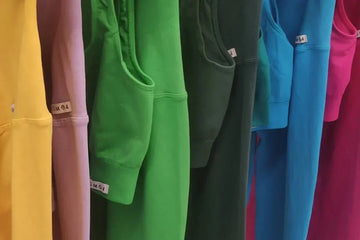
Seamless clothing has become an important part of sportswear because it meets a very practical need: wearing garments that follow the body's movements without causing unnecessary discomfort. Its distinctive feature is not simply its smooth, uniform appearance. Above all, it is the way the fabric is constructed, with fewer seams and knit structures that can vary from one area of the garment to another.
Leggings, tops and shirts made using this technique can feel snug, stretchy and secure without necessarily being tight. But what does seamless really mean? Are all seamless garments the same? And how important are the yarn, waistband and choice of size? In this guide, we will explore how the technology works, its benefits, how to recognise a well-designed garment and why seamless construction is particularly suitable for women's sportswear and men's sportswear.
What Is Seamless Clothing?
The English word seamless means "without seams". In the textile industry, it identifies a family of manufacturing techniques that allow most of a garment to be produced directly by a knitting machine, reducing the number of fabric panels that need to be cut and sewn together. This is why it is often referred to as seam-free clothing, although the expression is not always entirely literal.
A seamless garment may still have certain functional seams, for example in the crotch area of leggings, along finishing edges or where specific elements need to be joined. The difference compared with traditional garment construction is not the complete absence of sewing thread, but rather the reduction of joining points and the possibility of building specific fit characteristics directly into the knitted fabric.
It is also useful to distinguish three terms that are often confused: seamless describes the construction method, stretch describes a material property, and shaping describes the effect created by the garment's design. Leggings can combine all three characteristics, but they are not synonymous, and none automatically implies the others.
How Is a Seamless Garment Made?
Production uses electronic knitting machines, often circular knitting machines, developed from technologies traditionally used in hosiery manufacturing. The yarns are knitted into a tubular structure: instead of cutting all the pieces from a pre-existing fabric sheet, the machine directly creates a significant portion of the garment. The essential finishing and assembly operations are then carried out.
These machines can control needle selection and vary the knit structure throughout the garment. This makes it possible to alternate denser areas with areas featuring different structures, incorporate ribbed patterns, modify stretch response and create decorative details without necessarily adding another sewn panel. This is one of the reasons seamless construction is particularly interesting for activewear.
However, not all variations in knit structure serve the same purpose. A denser area may be designed to provide coverage or support; a more open knit may promote ventilation; and a ribbed structure may change both the stretch sensation and the visual appearance. To understand how a garment will perform, it is necessary to consider the combination of yarn, knit structure, density and fit, rather than simply looking at the surface pattern.

Why Is Tubular Knitting So Versatile?
A knitted garment must adapt to different body proportions: the waist, hips, buttocks, thighs and, in the case of tops, the chest and shoulders. Seamless construction allows these areas to be designed in relation to one another. This does not mean the garment is automatically custom-made, but it gives designers more tools to distribute fit and support where needed.
The Benefits of Seamless Clothing
The benefits of seamless clothing mainly concern the relationship between the garment and the body. During a working day, a walk or a gym session, fabric needs to accommodate continuous movement and changes in posture. Good construction helps make this interaction feel more natural, especially when combined with soft, stretchy yarns.
1. Fewer Friction Points Against the Skin
Reducing the number of seams decreases the number of edges and joins that may be noticeable against the skin. During repetitive exercises such as running, lunges, squats or cycling, this can help limit localised friction and the risk of discomfort. This benefit is particularly noticeable in areas where the garment moves against the skin.
Research into skin-textile interactions confirms that friction, moisture, pressure and movement duration influence comfort. A seamless garment does not eliminate every risk of irritation: the material, size, fabric folds and perspiration also play a role. Nevertheless, reducing seams is a sensible design choice when aiming for a smoother, more comfortable surface.
2. An Even Fit Without the Need for Strong Compression
Leggings can comfortably hug the waist and hips while remaining secure without feeling excessively tight. A snug fit and compression are not the same thing: the first refers to how closely the fabric follows the body's shape, while the second concerns the pressure exerted on the body. Many people enjoy a close-fitting, supportive feel but find highly compressive garments stiff or restrictive, particularly when worn for several hours.
Seamless construction allows the fabric's stretch response to be distributed through variations in knit structure. The goal should not be to make the garment "as tight as possible", but to achieve the right balance between stability, freedom of movement and comfort against the skin. Personal preference remains important, as does the garment's intended use.
3. Freedom of Movement During Exercise
Our joints perform very different movements: knees bend deeply during squats, hips rotate during lunges, and shoulders lift during upper-body exercises. A stretchy, properly sized garment accommodates these movements without creating excessive tension in specific areas. Fewer seams can make transitions between positions feel smoother.
However, the fabric must do more than stretch: it also needs to recover its original shape. If a garment gradually loses its elasticity, the waistband may slide down or the material may gather into folds. Stretch, elastic recovery and stability are therefore three characteristics that should be evaluated together.
4. Different Knit Structures and Comfort Management
Seamless technology makes it possible to create different structures within the same garment. This is useful, for example, when a more breathable knit is desired in certain areas and greater density in others. Actual breathability, however, also depends on the yarns, fabric density, temperature and conditions of use: not every seamless garment is automatically cooler.
During intense workouts, the ability to manage moisture and dry quickly is often more important than how lightweight the fabric initially feels. In colder months, a denser knit offering greater thermal comfort may be preferable. Seamless construction can accommodate both needs.
5. A Smooth Surface That Enhances the Silhouette
Knit structures can follow the body's natural lines without requiring numerous decorative seams. This creates a clean appearance that works particularly well for sports leggings, fitted tops and leisurewear. Well-designed waistbands and carefully developed back constructions can enhance the waist and buttocks without necessarily turning the garment into high-compression clothing.
However, the visual effect depends on the chosen construction: leggings without a central seam across the buttocks produce a different result from a design featuring back ruching. These are different approaches to fit rather than indicators of superior or inferior quality.
6. Lasting Comfort and Attention to Durability
A more uniform surface can also feel comfortable for people who spend several hours sitting, walk frequently or want close-fitting clothing that does not feel restrictive. Long-term durability, however, is not guaranteed simply because a garment has fewer seams. It depends primarily on yarn quality, correct knit tension, finishing, the chosen size and how the garment is washed.
Seamless vs. Traditional Clothing: What Are the Differences?
Seamless construction and traditional garment manufacturing are two valid production methods. Comparing them helps identify which characteristics to consider before buying, rather than suggesting that one technique is always better than the other.
| Feature | Seamless Construction | Traditional Construction |
|---|---|---|
| Construction | Mainly tubular knitting, with few joins | Fabric panels cut and subsequently assembled |
| Seams | Reduced, but not always completely absent | More numerous at joining points |
| Functional zones | Can be differentiated through the knit structure | Can also be created using different panels, cuts or materials |
| Feel against the skin | Potentially smoother in areas without joins | Depends on seams, finishes and materials |
| Breathability and coverage | Depend on the yarn and knit structure | Depend on the yarn, fabric and design |
| Durability | Related to yarns, knitting technique, finishes and use | Related to materials, seams, finishes and use |
Where and When to Wear Seamless Clothing
Versatility is one of the reasons this manufacturing technique has become so widespread. Although it is strongly associated with gym leggings, it is also used for everyday clothing, underwear, technical garments and apparel designed for different sports.
Gym, Fitness and Dynamic Activities
During weight training, functional training and bodyweight exercises, garments that stay in place through bending, twisting and stretching are particularly useful. Seamless leggings, shorts, tops, shirts and boleros can reduce the sensation of certain seams and provide a smoother, more comfortable fit. For activities involving very intense movements, it remains important to assess the support provided by a sports bra or top, which does not depend solely on seamless construction.
Yoga, Pilates, Stretching and Walking
These activities benefit from a soft, close-fitting feel without stiffness around the waist or legs. Seamless garments can comfortably accommodate positions held for extended periods and gradual transitions between exercises. For people who walk frequently, uniform contact with the skin is also a practical consideration when choosing clothing.
Everyday Wear and Leisure
The comfort of technical clothing is not limited to the gym. A stretchy tank top, fitted shirt or pair of leggings can also be useful during active days, commuting and informal occasions. Once a workout is finished, however, it is preferable to change into clean, dry clothes rather than continue wearing garments that have become sweaty.
Lingerie and Shapewear
In underwear, reducing seams can create a less visible outline beneath clothing. In shapewear, the ability to vary knit structures makes it possible to design areas with different levels of snugness. In these cases, too, it is important to choose garments that match your measurements: excessive pressure is not automatically a sign of a good fit.

Which Materials and Technologies Make a Difference?
The term seamless does not refer to a specific fibre. Seamless garments can be produced using different materials and fibre blends: the knit construction defines the manufacturing technique, while the yarns help determine softness, stretch, thermal behaviour, moisture management and durability.
Polyamide, Elastane and Other Fibres
Polyamide is widely used in technical clothing because of its durability, pleasant feel and suitability for producing lightweight yet compact knitted fabrics. Elastane contributes to stretch and shape recovery. Polyester is also used in activewear, particularly when specific drying and moisture-wicking properties are required. However, comparing two garments based only on the percentages shown on their labels is not enough: yarn quality and knitting techniques can significantly change the final result.
Seamless and FIR: Two Technologies That Can Work Together
In FGM04 garments, seamless construction can be combined with F.I.R. (Far Infrared Rays) technology. These are two distinct concepts: seamless refers to the way the garment is constructed, while FIR technology involves mineral particles permanently incorporated into the yarn, designed to interact with infrared radiation associated with the heat naturally emitted by the body.
For the wearer, the most immediately noticeable benefit of seamless construction remains the comfort of the fit. The FIR component adds a functional characteristic to the material, making it interesting for anyone who wants to incorporate technical fabrics into their wellness and movement routine. Research into FIR textiles is investigating possible interactions with thermoregulation and microcirculatory parameters; however, the available clinical findings remain heterogeneous and do not allow individual or therapeutic effects to be guaranteed. This distinction makes it possible to highlight the technology without confusing yarn properties with benefits demonstrated in wearers.
Because the mineral component is integrated into the yarn, it is not a cosmetic treatment that needs to be reapplied after washing. Proper garment care nevertheless remains essential to preserve elasticity, shape and wearing comfort.
Q-Skin®, HotFIR, CryoFIR and BambùFIR: Different Needs
FGM04 also uses technical yarns and fabrics selected for specific requirements. For workouts where freshness and odour management are priorities, for example, highly breathable garments made with Q-Skin® are available. This polyamide yarn incorporates silver ions and is designed to limit the proliferation of bacteria responsible for unpleasant odours on the fabric; it should not be confused with a disinfecting treatment for the skin.
The Essence collection in BambùFIR offers a distinctive fabric feel and structure, combining bamboo-derived fibre with FIR technology. For those looking for greater thermal protection, HotFIR garments are designed to help retain body heat. When the priority is a cooler sensation and lightweight fabric, the CryoFIR collection, developed to promote heat dissipation, is worth considering.
Finally, leggings featuring FIR technology demonstrate how different fits can share the same family of functional yarns while offering different aesthetic and support characteristics. The important thing is to choose the fabric according to its intended use, without automatically attributing the same properties to every garment.
How to Choose the Right Seamless Leggings
Leggings are an excellent example of how much garment design matters. Two styles can both be seamless, fitted and made from polyamide and elastane, yet feel completely different around the waist or create very different effects on the silhouette. To find the right pair, several elements should be considered separately.
The Fabric: Softness, Stretch and Coverage
Check the composition and, above all, the description of the fabric's performance. For workouts involving squats and bending movements, coverage when stretched is essential: the material should maintain its intended appearance even when stretched across the buttocks. An opaque, compact fabric may feel different from a ribbed knit or a version designed for higher temperatures.
Softness does not mean looseness. Leggings can feel pleasantly stretchy while still providing a precise, snug fit. Strong pressure is not necessary for a garment to stay in place.
The Fit: Snug but Not Restrictive
The first rule is to compare your waist and hip measurements in centimetres with the size chart for the specific product. Hip and buttock circumference are particularly important because this is one of the areas where the fabric experiences the greatest stretch. Your usual jeans size, body weight or a review stating that a garment "runs small" cannot replace accurate body measurements.
If the fabric is stretched too tightly, it may lose some of its coverage, place excessive tension on the seams and prevent the back construction from sitting as intended. If it is too loose, it may slide down or form folds. When your measurements fall between two sizes, pay particular attention to the circumference around the buttocks and, if in doubt, choose the size that does not place excessive strain on the fabric.
The Waistband: Height and Shape Are Two Different Features
A high, straight waistband wraps around the waist with a regular, even line. A V-shaped waistband, on the other hand, changes the design of the back, visually emphasising the waistline. Waist rise, waistband shape and waistband height in centimetres should not be confused: two pairs of high-waisted leggings may have very different constructions.
Stability during movement also matters. A well-designed waistband should accommodate bending and twisting without rolling down or requiring constant adjustments. The preference for a straight or V-shaped waistband is personal and depends on the desired appearance and feel.
Back Construction: Basic, Soft Push Up and Push Up
When choosing women's leggings, you will find designs without central ruching, soft push-up constructions and push-up styles featuring ruching. A Basic construction prioritises a smooth back profile and, in the dedicated FGM04 models, the absence of a central seam across the buttocks. Soft Push Up versions enhance the body's natural curves more subtly through their construction. Push Up styles provide more pronounced shaping, often with back ruching.
It is not a question of choosing the style that "squeezes the most". The result depends on the amount of fabric available, the position of the seam or ruching and how it interacts with the waistband. Choosing a size that is too small may actually reduce the intended shaping effect and place unnecessary strain on the joining points.
A Practical Fit Test Before Deciding
When trying on leggings, take a few steps, sit down, lift one knee and perform a squat. Check that the waistband stays in place, the crotch fits correctly and the fabric does not become excessively transparent. Also observe how it returns to its original position after movement: good elastic recovery is a more meaningful indicator of quality than strong compression when first putting the leggings on.
FGM04's Approach to Seamless Technology
Seamless construction is part of the identity of FGM04 technical clothing: it is used to create snug, comfortable garments that enhance different body shapes through carefully designed knit structures. Italian manufacturing and attention to yarn quality make it possible to combine functional and aesthetic details without necessarily relying on strong compression.
FGM04 textile products certified to OEKO-TEX® STANDARD 100 undergo testing for harmful substances according to the requirements of the standard. For individual products, any Class 1 classification is specified on the relevant product pages. You can learn more about the criteria on the official OEKO-TEX® website and also consult the Wikipedia page dedicated to the standard.
Different Styles for Different Fits and Needs
The collection includes leggings and shorts with different waistbands and back constructions, tops designed to support the bust, lightweight shirts and jumpsuits. The table summarises some of the characteristics of the styles featured in the original gallery: where the product description does not specify the waistband height, no assumed measurement has been added.
| Garment and Use | Fabric and Feel | Fit and Construction | Waist Rise and Waistband |
|---|---|---|---|
|
Leggings Push Up Gym Fashion Gym, fitness and leisure |
Four-season FIR; 92% polyamide, 8% elastane; opaque and non-see-through | Regular, snug fit; push-up construction with back ruching | High-waisted; 9 cm high V-shaped waistband |
|
Shorts All-Up Workouts and warm days |
Four-season FIR; 92% polyamide, 8% elastane; opaque fabric | Regular, snug fit; push-up with ruching and short legs | High-waisted; 13 cm high straight waistband |
|
Men's Leggings Sports and everyday movement |
Four-season FIR; 90% polyamide, 10% elastane; breathable and opaque | Regular, snug fit; seamless design | Elasticated waist; waistband height not specified |
|
Top Gym Fashion Fitness and medium support |
Four-season FIR; 92% polyamide, 8% elastane; opaque | Regular fit; crew neck, wide straps, removable pads | Not applicable: upper-body garment |
|
Bolero Gym Fashion Lightweight arm and shoulder coverage |
Q-Skin®; 92% polyamide, 8% elastane; suitable for all seasons | Regular fit; cropped design, long sleeves with thumbholes | Not applicable: cropped upper-body garment |
|
Jumpsuit Artemide Workouts and complete sporty outfits |
Four-season FIR; 88% polyamide, 12% elastane; opaque and non-see-through | Regular fit; full-length jumpsuit with push-up effect, ruching and open back | One-piece construction; no separate waistband height specified in centimetres |
The table highlights an important point: fabric, back construction, fit, waist rise and waistband shape are separate characteristics. The style with a V-shaped waistband, for example, enhances the silhouette differently from shorts with a high, straight waistband; meanwhile, a top designed for medium support meets a different functional need. The choice depends on the type of movement, desired coverage and preferred feel.
Another example is the wide-strap technical tank top: it uses four-season FIR fabric, has a crew neck, a regular fit and a length that covers the abdomen. It may be preferred by those who want more coverage than a cropped top. In this case, discussing a leggings waistband would make no sense, as the garment is designed for the upper body.
Seamless Clothing and Responsible Resource Use
One interesting aspect of seamless production is its potential to reduce certain cutting and assembly operations. When a garment is produced in a tubular shape, waste generated by cutting numerous fabric panels can be reduced. Studies on knitwear design identify production methods requiring fewer seams as strategies that may improve material efficiency.
However, this does not mean that every seamless garment is automatically sustainable. Its overall environmental impact also depends on the origin of the fibres, energy used during production, dyeing processes, transportation, product lifespan and end-of-life management. Fabric made from a blend of different materials may require more complex recycling processes than a single-material fabric, regardless of the number of seams.
Washing and Care Tips for Seamless Clothing
Technical garments should be able to maintain their elasticity and fit after repeated use. Proper care has a greater impact on this than many people realise: high temperatures, aggressive friction and unsuitable drying methods can place particular stress on elastic fibres. The main rule is to always follow the care instructions on the specific product's label.
| Care Step | What to Do | Why It Matters |
|---|---|---|
| Washing | Wash by hand or in a washing machine on a delicate cycle, maximum 30°C, if permitted by the care label | Helps preserve elastic fibres, shape and colours |
| Preparation | Separate colours, protect delicate garments in a laundry bag and close zips or hooks on other clothing | Reduces accidental snagging and abrasion |
| Detergents | Use a mild detergent; avoid fabric softener and harsh bleaching agents | Helps preserve finishes and the characteristics of technical fabrics |
| Drying | Air-dry away from direct heat sources; avoid tumble drying | Limits thermal stress on elastic components |
| Wearing | Wear the correct size and avoid pulling directly on push-up seams | Prevents localised tension and helps the garment retain its shape |
When putting on leggings, it is best to gather the fabric along the legs and gradually pull it up towards the hips, rather than tugging forcefully on the waistband or any ruching. Prolonged contact with very rough surfaces, Velcro and abrasive gym equipment can also damage the knit or encourage pilling.
If small fabric pills appear on the surface, this does not necessarily mean the garment has lost its structural properties: pilling is a phenomenon associated with friction and should be distinguished from loss of elasticity, holes or tears. After washing, allow the fabric to dry completely before storing it, and always wear a clean garment for your next workout.
Frequently Asked Questions About Seamless Clothing
Does Seamless Really Mean Completely Free of Seams?
No. Most seamless garments significantly reduce the number of assembly points, but they may still have seams needed for structure or finishing. To assess comfort, pay particular attention to where any joins are located and how they come into contact with the body.
Are Seamless Leggings Always Shaping or Compressive?
No. Seamless describes the construction method, not the level of compression. There are soft, stretchy, close-fitting garments as well as styles designed to provide stronger support. The sensation depends on the yarns, knit structures, size and design of the garment.
Does Seamless Fabric Prevent Skin Irritation?
Reducing seams can limit certain friction points and contribute to comfort, but it does not guarantee the absence of irritation. Moisture, perspiration, repeated rubbing, individual skin sensitivity and incorrect sizing may also cause discomfort. Choosing clean garments suitable for the activity and in the correct size is always advisable.
How Can You Tell Whether Seamless Leggings Will Be See-Through?
Knit density, colour, stated coverage and, above all, the amount of fabric available when stretched all matter. Try performing a squat in natural light: if the fabric becomes very transparent across the buttocks, check whether the size is too small. Underwear in a strongly contrasting colour can also affect how opaque the fabric appears.
Is Seamless Technology Suitable for People with Sensitive Skin?
Having fewer seams may be beneficial for comfort, but skin tolerance depends on fabric composition, finishes and individual sensitivity. Anyone who pays particular attention to how textiles feel against the skin should read the label, consider relevant certifications and check that the garment fits without excessive tightness.
Does the Percentage of Elastane Indicate How Tight a Garment Will Feel?
Not on its own. Elastane content contributes to stretch properties, but perceived pressure and shape recovery also depend on knit density, yarn type, manufacturing technique and the relationship between garment size and body measurements. Two fabrics with identical compositions can behave very differently.
If Seamless Leggings Feel Soft, Should I Choose a Smaller Size?
No. A soft, snug fit may be exactly what the design is intended to provide. Automatically sizing down can increase fabric tension, reduce coverage and compromise the shaping effect at the back. Measurements in centimetres from the product size chart remain the most reliable reference.
Are Seamless and FIR Technology the Same Thing?
No. Seamless refers to the garment's construction, while FIR technology concerns characteristics incorporated into the yarn. A garment can be seamless without featuring FIR technology, combine both technologies or use other functional yarns. Reading the individual product description helps avoid attributing properties to a garment that it does not have.
Can Seamless Clothing Be Worn All Year Round?
Yes, provided that the fabric and its intended use are suitable for the environmental conditions. The construction technique alone does not determine how warm or cool a garment will feel. There are four-season options, warmer constructions and lightweight fabrics designed for activity in mild or hot weather.
How Can You Preserve the Push-Up Effect and Waistband Shape Over Time?
The first precaution is to choose the correct size according to your buttock circumference. Then avoid pulling on the ruching when putting the garment on, follow the washing instructions, do not tumble dry and allow the fabric to air-dry naturally. These precautions help limit stress on elastane and functional seams.
Conclusion: The Value of Seamless Clothing Lies in How It Moves with Your Body
Seamless clothing is more than simply a garment with fewer seams. It is the result of a manufacturing process that allows stretch, fit, texture and the distribution of functional zones to be designed as an integrated whole. Its most tangible benefits include the potential to reduce certain friction points, create a smoother surface and produce garments that follow the body's movements without unnecessary restriction.
However, choosing the right garment means looking beyond the word "seamless": consider the yarn, level of coverage, waistband design, waist rise, back construction and, above all, size. FGM04 brings these possibilities together through technical fabrics, different styles and fits designed for a range of needs. The best result is not the garment that squeezes the most, but the one that feels right for you as you move.
Sources and Technical References
Technical, institutional and research publications were consulted for information concerning manufacturing and scientific aspects. The studies cited address general principles of textile technology and do not constitute specific clinical evidence for individual FGM04 products.
- Santoni, Seamless. Description of circular knitting technology for producing garments with reduced seams. Official technical source.
- A Brief Review on Factors Affecting the Tribological Interaction between Human Skin and Different Textile Materials, Materials (2022). Review of factors influencing friction and comfort in skin-textile contact. PubMed.
- Utilisation of far infrared-emitting garments for optimising performance and recovery in sport: Real potential or new fad?, PLOS ONE (2021). Systematic review of FIR garments and the limitations of the available evidence. Full text.
- OEKO-TEX® STANDARD 100. Testing criteria for harmful substances in certified textile products. Official website.
- Q-SKIN® by Fulgar. Technical information about polyamide yarn incorporating silver ions. Manufacturer's technical specifications.
- Investigating knitwear product development in small and medium enterprises, Cleaner Logistics and Supply Chain (2023). Research into knitwear design and opportunities to reduce material waste. Open-access study.

 English
